

Managing a malpositioned intraocular lens to protect the cornea and achieve a desirable visual outcome
Intraocular lenses (IOL) are normally positioned securely within the eye following cataract or lens surgery. Occasionally, however, an IOL may be incorrectly positioned creating the potential for complications.
Mr Gurjeet Jutley, recently treated two patients referred with malpositioned intraocular lenses. Although very different in age and visual requirements, both cases required careful surgical management to prevent further damage to the eye.
The Patient Problem
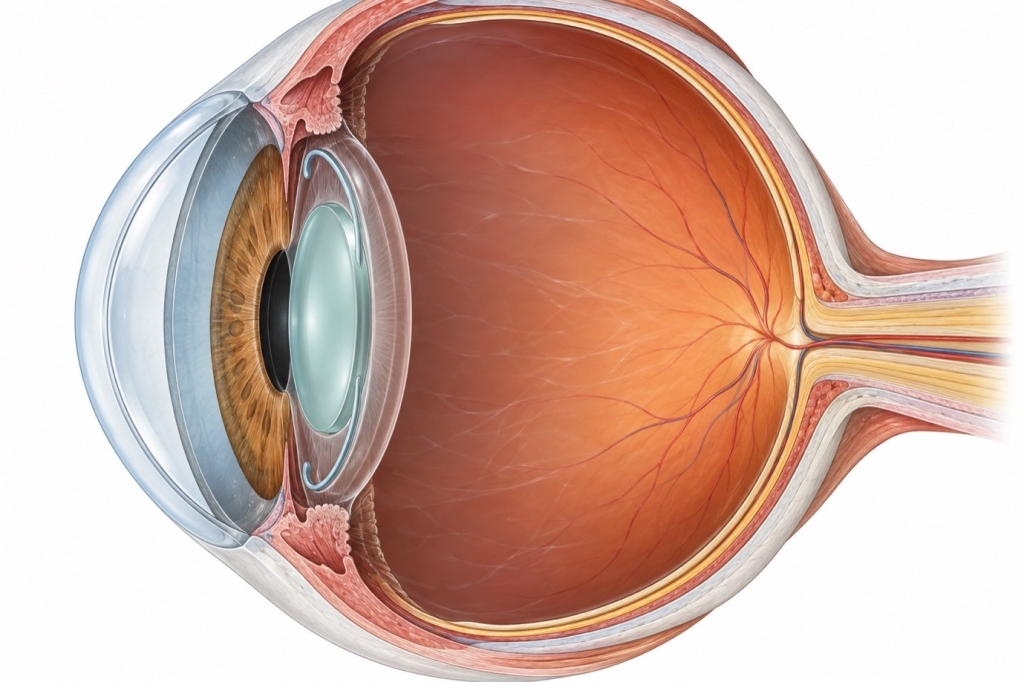
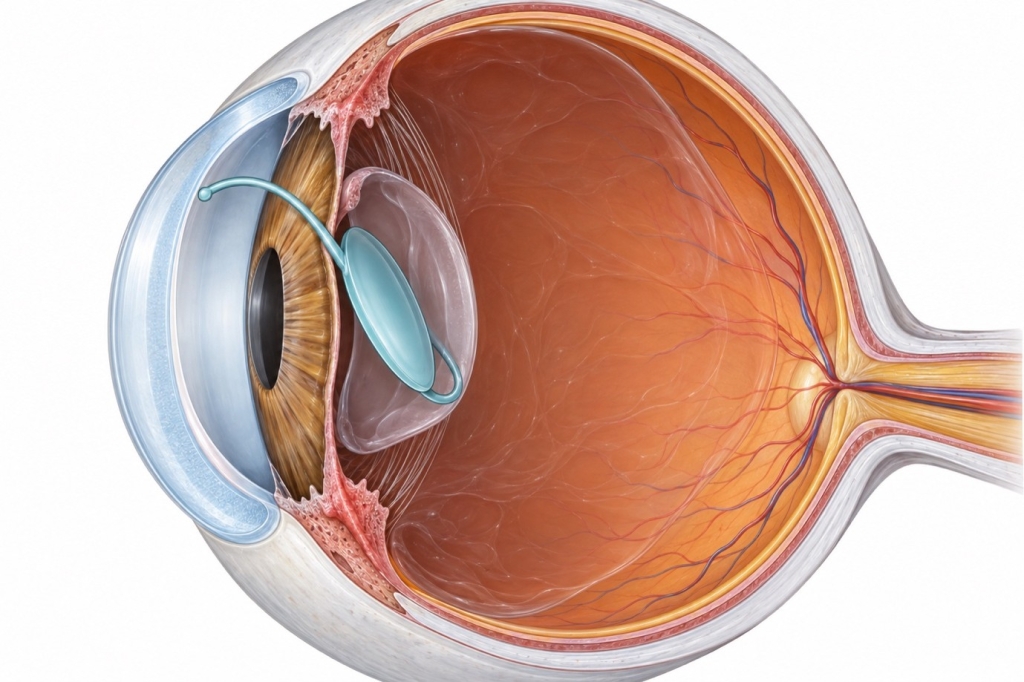
In both cases, an intraocular lens previously implanted elsewhere were not within the capsular bag. Part of the lens that is known as the haptic, which helps support and stabilise the IOL was positioned in a way that was adversely affecting the cornea.
This is clinically significant because persistent contact or mechanical trauma can damage the corneal endothelium, the delicate layer of cells responsible for maintaining corneal clarity. Significant endothelial cell loss can result in corneal oedema and, eventually, corneal decompensation, which can substantially affect vision and may require further treatment.
The first patient was 19 years old and had an amblyopic, or “lazy”, eye. Her main objectives were to help the pupil appear better and avoid the cornea decompensating, thus giving a ´whitish´ look to the eye. The second patient was an 88-year-old patient, who had the first surgery done approximately a decade ago. Her vision had begun to reduce with worsening corneal oedema.
The Procedure
IOL explantation and exchange can be considerably more complex than routine cataract surgery. Surgery must take account of the existing lens position, capsular support, corneal health and other structures within the eye. Previous surgical training in ocular trauma and the management of complex anterior segment cases can be particularly valuable when dealing with these less commonly encountered situations.
The Outcome
Both procedures achieved a good postoperative outcome, with the malpositioned lenses successfully removed and the source of ongoing corneal trauma addressed. Most importantly, each patient received personalised treatment appropriate to their individual eye. Both patients were pleased with their postoperative progress.
These cases demonstrate an important principle in complex lens surgery: the objective is not simply to remove or exchange an IOL, but to understand why the existing lens is causing a problem and determine the safest and most appropriate solution for that particular eye.
On this particular case, Mr Gurjeet Jutley, Consultant Ophthalmic Surgeon said. “When an intraocular lens is in the wrong position, the concern extends beyond vision alone. Continued contact can damage the corneal endothelium and, if left unresolved, may lead to corneal decompensation. Complex IOL surgery therefore requires careful assessment of both the lens and the structures we are trying to protect.”
Experience in Complex Eye Surgery
Mr Jutley has undertaken specialist fellowship training in ocular trauma including a Comprehensive Ocular Trauma Fellowship at the Islamia Eye Institute in Bangladesh. This experience is particularly relevant when managing complications involving previously implanted intraocular lenses, where surgery may require careful assessment and management of the lens, cornea and surrounding structures.
IOL explantation and exchange are not routinely encountered in the same way as standard cataract surgery, and each case requires an individual surgical approach. These two cases involving patients aged 19 and 88 demonstrate how the appropriate treatment can differ considerably depending on the condition of the eye, existing vision and the patient’s individual circumstances.